

Find Plugs for Fast Equipment Change-Out
The quick, safe and flexible connection capabilities of Meltric Decontactor Series plugs and receptacles makes them the ideal choice for plug and play and modular process applications. Modular factories commonly use Meltric to connect to electrical drops for quick connection/disconnection and rearrangement capabilities with total safety.
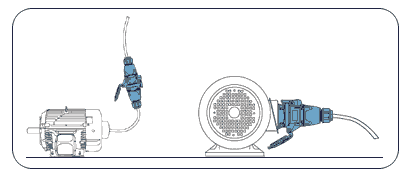
Using Meltric Decontactor Series Motor Plugs to connect motors and other equipment instead of hard-wiring can help reduce equipment change-out and downtime costs by as much as 50%. Pre-wiring replacement motors with Meltric plugs eliminates the time, cost and hassles of needing an electrician to do wiring during change-outs and perform associated safety related work practices. Most importantly, you get your process back on-line in a fraction of the time.
Motor Change-out Process Comparison*
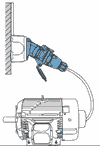
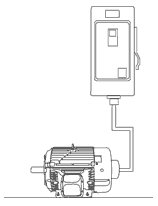
| Motor Connected with a Meltric Motor Plug | Motor Hard-wired to a Competitor's Bladed Disconnect Switch | Motor Connected with a Competitive Plug & Receptacle |
|---|---|---|
 |
 |
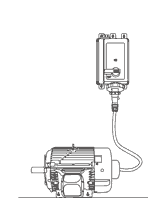 |
| 1. Mechanic removes plug from receptacle | 1. Electrician opens disconnect switch | 1. Open interlock switch |
| 2. Apply lockout/tagout as required | 2. Determine PPE requirements and obtain | 2. Determine PPE requirements & obtain |
| 3. Mechanic removes old/installs new motor | 3. Remove disconnect cover | 3. Remove interlock cover |
| 4. Mechanic inserts plug into receptacle | 4. Voltmeter test to verify deenergization | 4. Voltmeter test to verify deenergization |
| 5. Apply lockout/tagout | 5. Remove plug | |
| 6. Disconnect motor from hard-wiring | 6. Apply lockout/tagout as required | |
| 7. Mechanic removes old/installs new motor | 7. Remove old/install new motor | |
| 8. Electrician connects motor to hard wiring | 8. Insert plug into receptacle |
* Based on steps required to meet NFPA 70E guidelines
Solving the Motor Rotation Issue
PROBLEM: INCORRECT MOTOR ROTATION
Phase variations within a manufacturing plant and wiring errors during motor installation can cause motors to rotate in the wrong direction, extending downtime and potentially damaging products and/or equipment.
SOLUTION: USE DECONTACTOR SERIES SWITCH RATED PLUGS & RECEPTACLES TO HELP ENSURE CORRECT MOTOR ROTATION
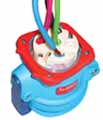
DECONTACTOR RECEPTACLE
When Decontactor receptacles are installed, a test motor or motor rotation meter can be used to verify that the intended polarization is achieved. Improper phasing can easily be corrected by switching wire locations on the receptacle.
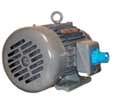
PREWIRED MOTOR
Test receptacles with matching polarization should also be installed at the motor service shop. This allows the electrician to verify that the intended direction of rotation has been achieved each time a plug or inlet is wired to a motor.
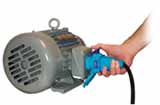
CONNECTING A MOTOR
Mechanics can safely connect motors that are pre-wired in this manner simply by plugging them in. The correct motor operation is ensured and the problems and additional downtime resulting from improper rotation is eliminated.